

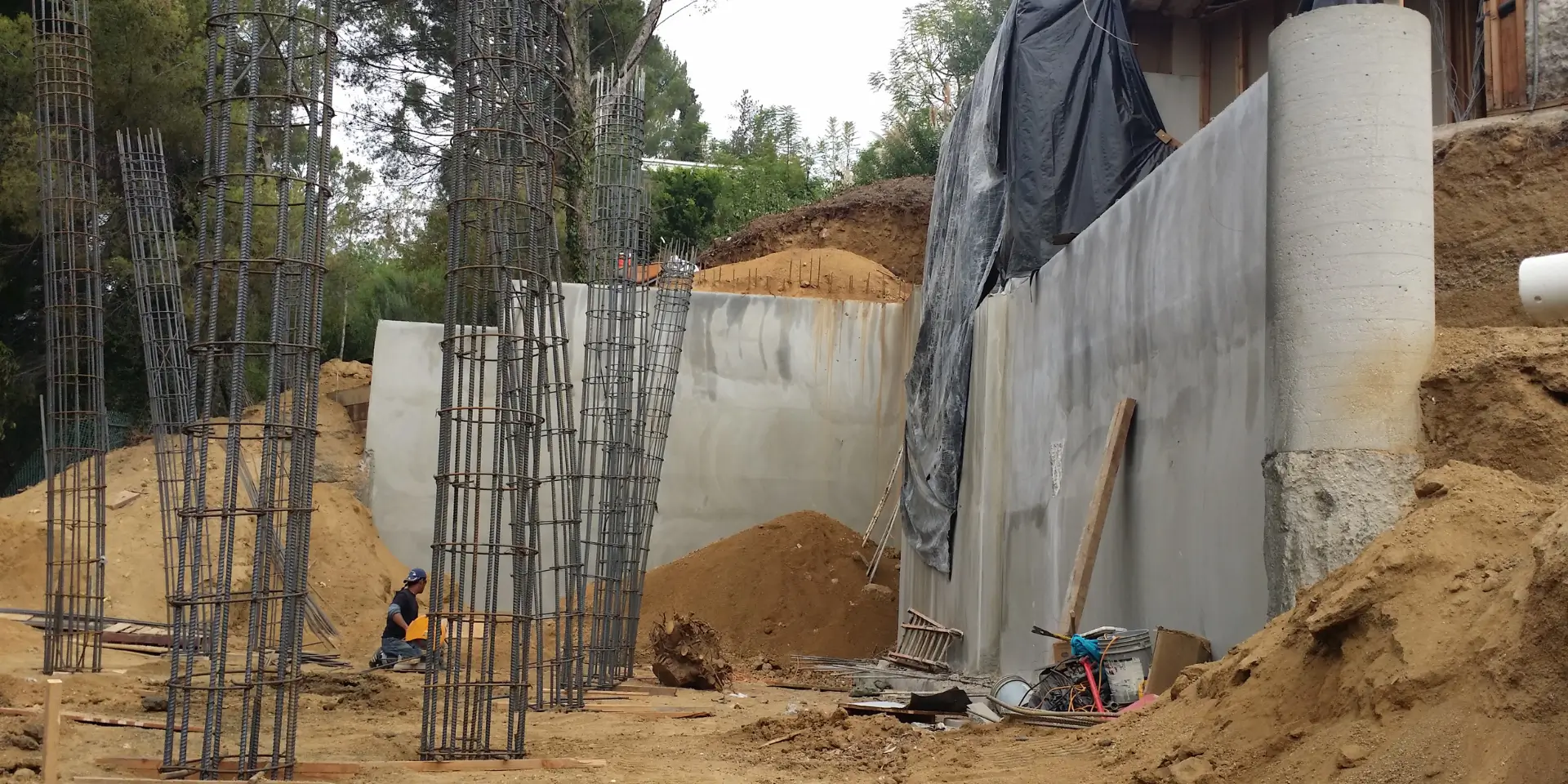
Building on hillside terrain offers incredible architectural opportunities, especially in Los Angeles where many luxury homes take advantage of dramatic views and elevated locations. However, hillside construction also introduces unique engineering challenges that must be addressed carefully to ensure long-term structural stability.
One of the most critical components of hillside construction is the retaining wall. Retaining walls play a vital role in stabilizing soil, protecting structures, and managing drainage on sloped terrain. Without properly engineered retaining walls, hillside properties can be vulnerable to soil movement, erosion, and structural damage.
In this guide, we explain what retaining walls are, how they work, and why they are essential for safe hillside construction.
What Is a Retaining Wall?
A retaining wall is a structural system designed to hold back soil and prevent it from moving downhill due to gravity. When a property is built on a slope, the natural terrain often needs to be reshaped or terraced to create stable building areas.
Retaining walls allow builders to support these changes in elevation while keeping surrounding soil securely in place.
In hillside construction, retaining walls help create:
- stable foundations
- level building pads
- terraced outdoor spaces
- safe driveway access
- protected landscape areas
Without them, soil pressure and erosion could threaten the stability of the structure and surrounding land.
Why Retaining Walls Are Essential for Hillside Homes
Hillside lots place constant pressure on the structures that support them. Gravity causes soil to push outward against vertical surfaces, a force known as lateral earth pressure.
Retaining walls are engineered specifically to resist this pressure.
In addition to holding back soil, retaining walls also help:
- stabilize slopes
- prevent erosion
- control water flow
- protect foundations
- improve overall site safety
For homes built on steep terrain, retaining walls are not just a landscaping feature—they are a structural necessity.
Common Types of Retaining Walls
Different hillside conditions require different retaining wall systems. Structural engineers select the appropriate solution based on soil conditions, slope steepness, and load requirements.
Gravity Retaining Walls
Gravity walls rely on their own weight to resist soil pressure. These walls are typically constructed from heavy materials such as concrete or stone and are often used in lower-height applications.
Reinforced Concrete Retaining Walls
Reinforced concrete walls use steel reinforcement to increase strength and stability. These walls are common in residential hillside construction because they can support significant soil loads while maintaining relatively slim profiles.
Cantilever Retaining Walls
Cantilever retaining walls use a reinforced base slab and vertical wall that work together to resist soil pressure. This design allows the structure to distribute forces efficiently and is frequently used in engineered hillside projects.
Soldier Pile and Lagging Systems
This system involves vertical steel piles installed into the ground with horizontal panels placed between them. Soldier pile systems are often used during excavation or in areas with limited construction access.
They are particularly useful for steep hillside construction where deep structural support is required.
The Importance of Proper Drainage
Water is one of the most significant threats to retaining wall performance. When water accumulates behind a wall, it increases pressure on the structure and can lead to failure if not managed properly.
To prevent this, engineers design drainage systems that relieve hydrostatic pressure.
These systems may include:
- perforated drain pipes
- gravel backfill behind the wall
- drainage outlets
- waterproof membranes
- surface grading that directs water away from the structure
Proper drainage is just as important as the wall itself in maintaining hillside stability.
Engineering and Permitting Considerations
Retaining walls for hillside homes must meet strict engineering and permitting requirements, particularly in cities like Los Angeles where hillside construction is carefully regulated.
Structural engineers analyze several factors when designing retaining walls, including:
- soil composition
- slope stability
- seismic forces
- groundwater conditions
- structural load requirements
The design must comply with local building codes and often requires review by city planning and engineering departments before construction can begin.
Retaining Walls and Landscape Design
In addition to their structural function, retaining walls can also enhance the overall design of a hillside property.
When thoughtfully integrated into the architecture and landscaping, retaining walls can create:
- terraced gardens
- outdoor entertaining areas
- dramatic elevation changes
- visually striking landscape features
Materials such as natural stone, architectural concrete, and textured finishes can complement the home’s design while maintaining structural performance.
Construction Challenges on Hillside Sites
Building retaining walls on hillside properties requires careful coordination between engineers, contractors, and excavation teams.
Construction considerations may include:
- limited site access
- steep excavation areas
- temporary slope stabilization
- heavy equipment placement
- material delivery logistics
Experienced builders understand how to manage these challenges while maintaining safety and protecting surrounding structures.
Why Professional Engineering Matters
Retaining walls may appear simple, but they are complex structural systems that must be designed precisely.
Improperly designed or poorly constructed retaining walls can lead to serious issues such as:
- soil erosion
- structural movement
- drainage failures
- long-term stability concerns
Working with experienced engineers and contractors ensures the retaining wall system is properly designed for the specific conditions of the site.
Final Thoughts
Retaining walls are one of the most important elements of hillside construction. They stabilize slopes, protect structures, and allow architects to transform steep terrain into safe and usable living spaces.
When designed and built correctly, retaining walls provide both structural protection and architectural opportunity. They make it possible to build remarkable hillside homes while ensuring long-term safety and stability.
For homeowners planning hillside construction, understanding the role of retaining walls is an essential step in creating a successful project.
FAQs
What is the purpose of a retaining wall?
A retaining wall holds back soil on sloped terrain, preventing erosion and stabilizing the land so structures can be safely built on hillside properties.
Are retaining walls required for hillside homes?
In most hillside construction projects, retaining walls are necessary to create stable building areas and protect the structure from soil movement.
What materials are used to build retaining walls?
Common materials include reinforced concrete, natural stone, steel-reinforced systems, and engineered structural solutions designed for specific soil conditions.
Why is drainage important for retaining walls?
Proper drainage prevents water from building up behind the wall, which can increase pressure and compromise the structure.
Can retaining walls also improve landscape design?
Yes. Retaining walls can create terraced gardens, outdoor living areas, and visually dynamic landscapes while maintaining slope stability.