

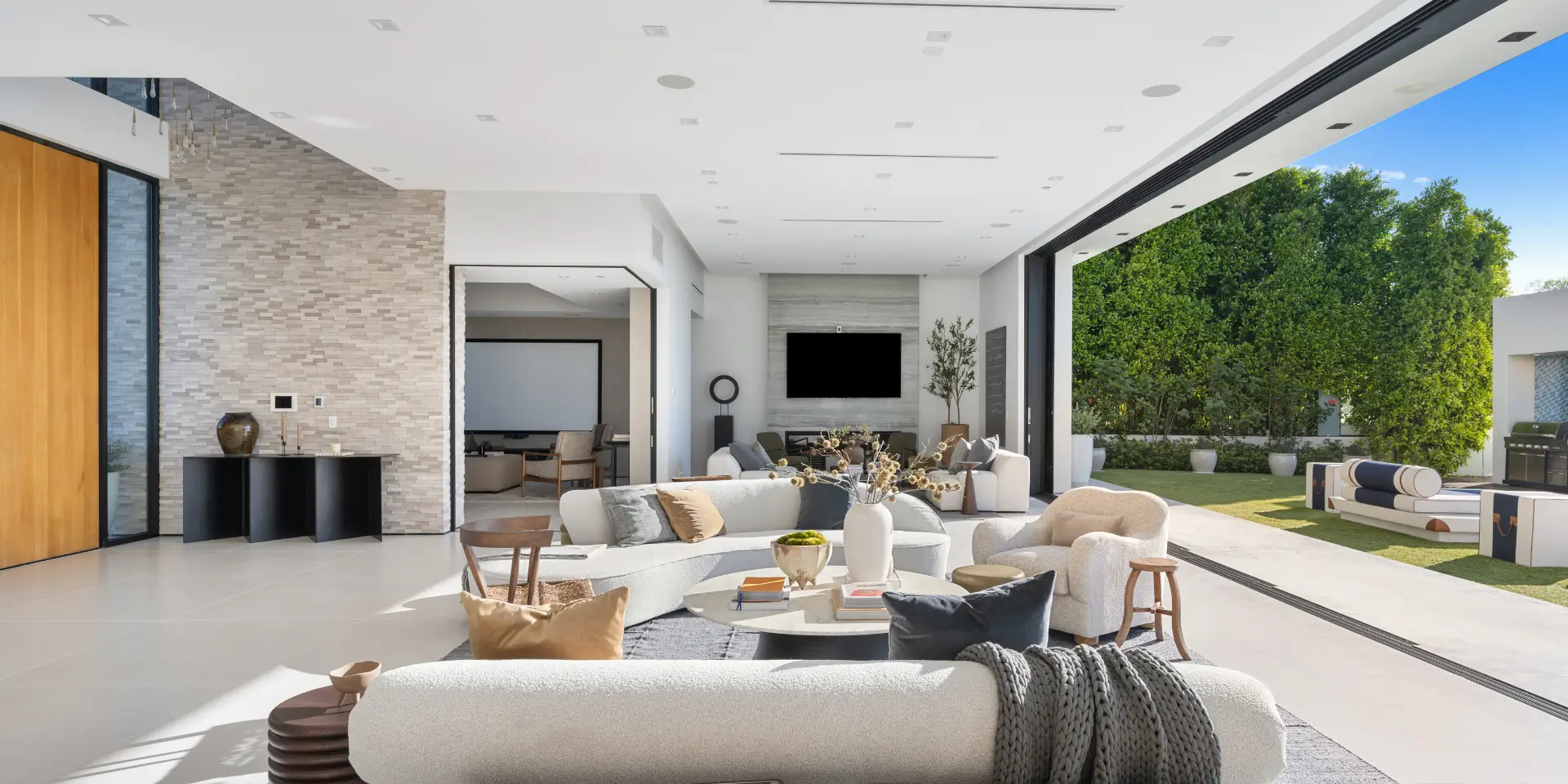
One of the defining characteristics of modern California architecture is the seamless connection between interior spaces and the outdoors. In regions like Los Angeles, where the climate allows for year-round outdoor living, architects increasingly design homes that blur the boundary between indoor comfort and outdoor relaxation.
Seamless indoor–outdoor transitions allow homes to feel more open, spacious, and connected to the surrounding landscape. Instead of treating outdoor areas as separate spaces, these designs integrate patios, courtyards, terraces, and gardens directly into the daily living experience.
By combining thoughtful architecture, structural planning, and carefully selected materials, homeowners can enjoy spaces that flow naturally from inside to outside.
What Is Indoor–Outdoor Living in Architecture?
Indoor–outdoor living refers to architectural strategies that create a visual and functional connection between interior spaces and exterior environments.
Rather than separating the home from the landscape, the design encourages movement, light, and airflow between the two.
Common design features that support indoor–outdoor living include:
- large sliding or pocket glass doors
- continuous flooring materials
- covered outdoor living areas
- courtyards and terraces
- outdoor kitchens and dining spaces
- strategically placed windows
These elements allow homeowners to experience outdoor spaces as natural extensions of their interior rooms.
Large Glass Openings and Retractable Walls
One of the most dramatic ways architects create seamless transitions is through expansive glass openings.
Sliding glass walls, folding doors, and retractable panels allow entire sections of a home to open directly to patios or courtyards. When fully opened, these systems eliminate the visual barrier between inside and outside.
This design strategy not only increases natural light but also creates a flexible living environment. Spaces can shift easily from private interior rooms to open entertaining areas depending on the homeowner’s needs.
In modern California homes, these architectural openings often become the focal point of the living and dining areas.
Continuous Flooring for Visual Flow
Another powerful technique used in indoor–outdoor design is the use of continuous flooring materials.
By extending the same or similar materials from interior spaces to exterior areas, architects create a visual flow that makes the home feel larger and more cohesive.
Examples include:
- stone flooring that extends from the living room to the patio
- porcelain tiles used both indoors and outdoors
- wood decking that aligns with interior wood flooring
- architectural concrete that continues across thresholds
These transitions help outdoor spaces feel like natural extensions of the home rather than separate zones.
Covered Outdoor Living Spaces
Covered outdoor areas are an essential component of California living. They provide shade, comfort, and flexibility for year-round use.
Architects often design outdoor living areas that mirror interior rooms. These spaces may include:
- outdoor lounges
- dining areas
- fireplaces or fire pits
- built-in seating
- outdoor televisions or entertainment systems
By treating outdoor areas as fully functional living spaces, the home expands beyond its interior walls.
Covered patios and pergolas also help regulate sunlight, allowing homeowners to enjoy outdoor environments even during warmer periods of the day.
Framing Views Through Architecture
In many Los Angeles homes—especially hillside properties—views are one of the most valuable aspects of the property.
Architects use indoor–outdoor transitions to frame these views intentionally. Large windows, sliding glass walls, and open terraces allow the surrounding landscape to become part of the interior experience.
Rather than simply placing windows randomly, designers carefully position openings to highlight specific views such as:
- city skylines
- ocean horizons
- hillside landscapes
- gardens or courtyards
This approach transforms the surrounding environment into a living backdrop for the home.
Enhancing Natural Ventilation
Indoor–outdoor transitions also improve airflow within the home.
When openings are positioned correctly, cross-ventilation can move fresh air through the structure naturally. This airflow improves indoor comfort while reducing reliance on mechanical cooling.
Courtyards, terraces, and open corridors often play a role in creating these ventilation pathways.
In climates like Southern California, where temperatures remain mild for much of the year, natural ventilation can significantly enhance the living experience.
Landscape Integration
Successful indoor–outdoor design is not only about architecture—it also involves thoughtful landscape planning.
Landscape designers work closely with architects and builders to create outdoor environments that complement the home’s layout.
Common strategies include:
- aligning garden pathways with interior circulation
- framing views with trees or planting beds
- creating courtyard gardens visible from multiple rooms
- integrating water features or sculptural landscaping elements
When architecture and landscape are designed together, the home feels fully integrated with its surroundings.
Lighting for Day and Night Transitions
Lighting plays an important role in maintaining the indoor–outdoor connection after sunset.
Exterior lighting systems can highlight landscape elements, architectural features, and outdoor living areas. When viewed from inside the home, these illuminated spaces maintain the visual depth created during the day.
Integrated lighting may include:
- landscape lighting
- pathway lights
- architectural wall lighting
- subtle recessed outdoor lighting
These systems allow outdoor spaces to remain visually connected to the home even after dark.
Construction Precision Is Essential
Although indoor–outdoor design appears effortless when completed, it requires careful construction planning.
Builders must coordinate several technical elements to achieve seamless transitions, including:
- structural support for large glass openings
- weatherproofing and waterproofing
- drainage integration
- precise alignment of flooring materials
- concealed track systems for sliding doors
Proper execution ensures that the design functions as beautifully as it appears.
Final Thoughts
Seamless indoor–outdoor transitions have become one of the defining elements of modern California architecture. By connecting interior living spaces with patios, courtyards, and landscaped environments, these designs create homes that feel open, flexible, and deeply connected to nature.
For homeowners in Los Angeles and other mild climates, this architectural approach enhances both daily living and entertaining. When executed thoughtfully, indoor–outdoor design transforms the home into a cohesive environment where architecture and landscape work together seamlessly.
FAQs
What is indoor–outdoor living in home design?
Indoor–outdoor living refers to architectural strategies that connect interior rooms with outdoor spaces such as patios, courtyards, and terraces.
Why is indoor–outdoor living popular in California?
California’s mild climate allows homeowners to use outdoor spaces throughout the year, making seamless transitions between interior and exterior environments highly desirable.
What architectural features support indoor–outdoor living?
Common features include sliding glass walls, continuous flooring materials, covered patios, courtyards, and large windows.
Does indoor–outdoor design improve natural lighting?
Yes. Large openings and outdoor spaces allow more daylight to enter the home, creating brighter interior environments.
Can indoor–outdoor living work on hillside homes?
Yes. In hillside properties, terraces and balconies can create dramatic connections between interior spaces and surrounding views.