

Designing and constructing homes on steep terrain presents unique architectural and engineering challenges. In cities like Los Angeles, where hillside properties are common and often offer spectacular views, architects and builders must carefully balance structural stability, site constraints, and aesthetic goals.
While building on sloped land requires specialized planning, these properties also offer opportunities for innovative design. When approached strategically, hillside homes can maximize views, natural light, and spatial creativity while maintaining structural safety and environmental sensitivity.
Through careful collaboration between architects, engineers, and construction teams, homes built on challenging terrain can become some of the most architecturally striking residences.
Understanding the Challenges of Steep Terrain
Steep lots present several conditions that influence how a home must be designed and constructed.
Unlike flat land, sloped terrain requires architects to consider factors such as soil stability, drainage patterns, and structural load distribution.
Key challenges include:
- uneven ground elevation
- soil movement or erosion risks
- limited access for construction equipment
- water drainage management
- structural stability on slopes
Proper site evaluation is essential before architectural design begins.
Site Analysis and Geotechnical Studies
Before construction begins, engineers perform detailed site analyses to understand the characteristics of the land.
Geotechnical studies evaluate soil composition, slope stability, and potential environmental risks. These reports help determine the most appropriate foundation and structural systems for the property.
Site analysis typically includes:
- soil testing and stability assessments
- slope measurements
- groundwater and drainage evaluation
- environmental impact considerations
These studies provide the foundation for safe and effective hillside construction.
Foundations Designed for Sloped Land
The foundation system plays a critical role in stabilizing hillside homes.
Because the ground surface is uneven, foundations must be engineered to anchor the structure securely while transferring loads safely into stable soil layers.
Common foundation systems for steep terrain include:
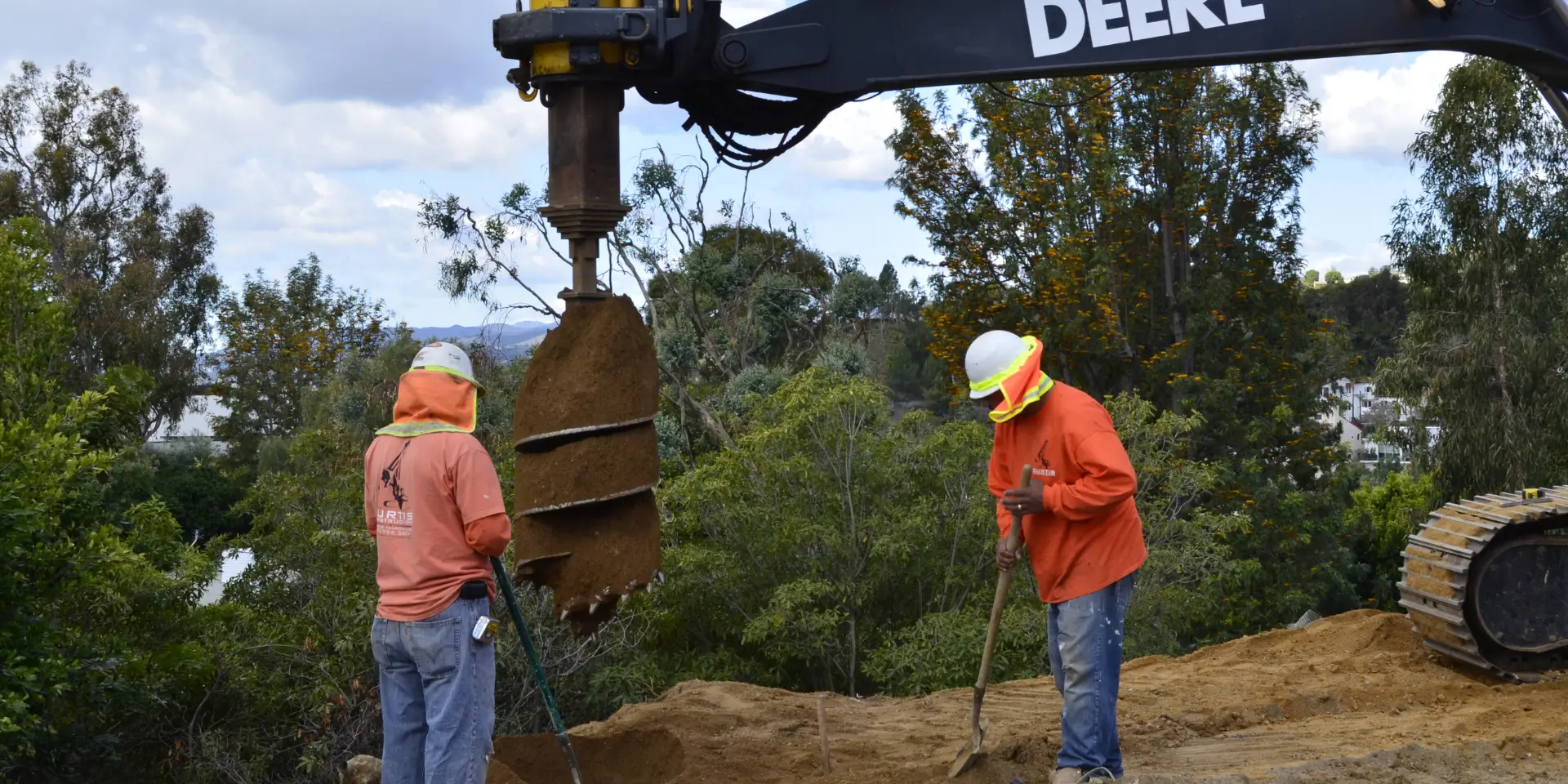
- caisson foundations drilled deep into stable soil or bedrock
- grade beam systems connecting structural supports
- reinforced concrete retaining structures
- stepped foundations that follow the slope
These systems ensure that the structure remains stable even on challenging terrain.
Retaining Walls and Structural Support
Retaining walls are essential components of hillside construction. They help hold soil in place while creating level building platforms.
These structural elements help prevent erosion and stabilize the slope around the home.
Retaining wall systems may include:
- reinforced concrete retaining walls
- terraced landscape retaining systems
- structural earth retention systems
Proper drainage behind retaining walls is also critical to prevent water pressure buildup.
Terraced Architecture
Rather than forcing a flat structure onto sloped land, architects often design homes that follow the natural contours of the site.
Terraced architecture allows the building to step down the hillside, creating multiple levels that blend with the landscape.
This design approach provides several advantages:
- reduced excavation requirements
- improved structural stability
- better integration with natural terrain
- opportunities for multiple outdoor terraces
Terraced homes also allow for dramatic architectural compositions.
Maximizing Views Through Strategic Design
One of the greatest advantages of hillside homes is their ability to capture expansive views.
Architects often orient living spaces, balconies, and terraces toward the most desirable vistas.
Design features that maximize views may include:
- large glass walls facing view corridors
- elevated outdoor terraces
- rooftop entertainment spaces
- open-plan living areas
These elements allow homeowners to experience the surrounding landscape while maintaining architectural elegance.
Managing Drainage and Water Flow
Proper drainage design is essential for hillside construction.
Water naturally flows downhill, so architects and engineers must ensure that drainage systems direct water safely away from the structure.
Drainage strategies may include:
- surface grading that channels water away from the home
- subsurface drainage systems behind retaining walls
- landscape design that controls runoff
Effective drainage helps protect both the structure and the surrounding landscape.
Access and Construction Logistics
Steep terrain can also create logistical challenges during construction.
Limited site access may require specialized equipment or modified construction techniques.
Builders often plan carefully for:
- material delivery routes
- crane placement for lifting structural components
- temporary access roads
- phased construction schedules
These strategies help ensure the project proceeds safely and efficiently.
Architectural Creativity on Challenging Sites
Although steep terrain presents challenges, it also encourages architectural creativity.
Designing within the constraints of the land often leads to unique homes that respond directly to the surrounding environment.
Architects may incorporate features such as:
- floating structural elements
- dramatic cantilevered decks
- split-level interior layouts
- outdoor terraces integrated into the hillside
These design solutions create homes that feel both dynamic and connected to their natural setting.
Final Thoughts
Building on steep terrain requires careful planning, advanced engineering, and thoughtful architectural design. Through detailed site analysis, specialized foundation systems, and innovative architectural strategies, builders can transform challenging lots into exceptional residential environments.
In hillside regions like Los Angeles, these homes often become some of the most distinctive and visually striking properties. When designed and constructed properly, hillside homes not only overcome site constraints but also celebrate the beauty of their natural surroundings.
FAQs
Is it safe to build homes on steep hillsides?
Yes. With proper engineering, foundation systems, and soil analysis, homes on steep terrain can be structurally safe and stable.
What foundation types are used for hillside homes?
Common systems include caisson foundations, grade beams, stepped foundations, and reinforced retaining walls.
Why are retaining walls important in hillside construction?
Retaining walls stabilize soil, prevent erosion, and create level building platforms on sloped land.
How do architects maximize views on hillside lots?
They orient living spaces, terraces, and windows toward scenic directions while positioning structural elements for stability.
Do hillside homes require special drainage systems?
Yes. Drainage systems must be carefully designed to direct water away from the structure and prevent erosion.