

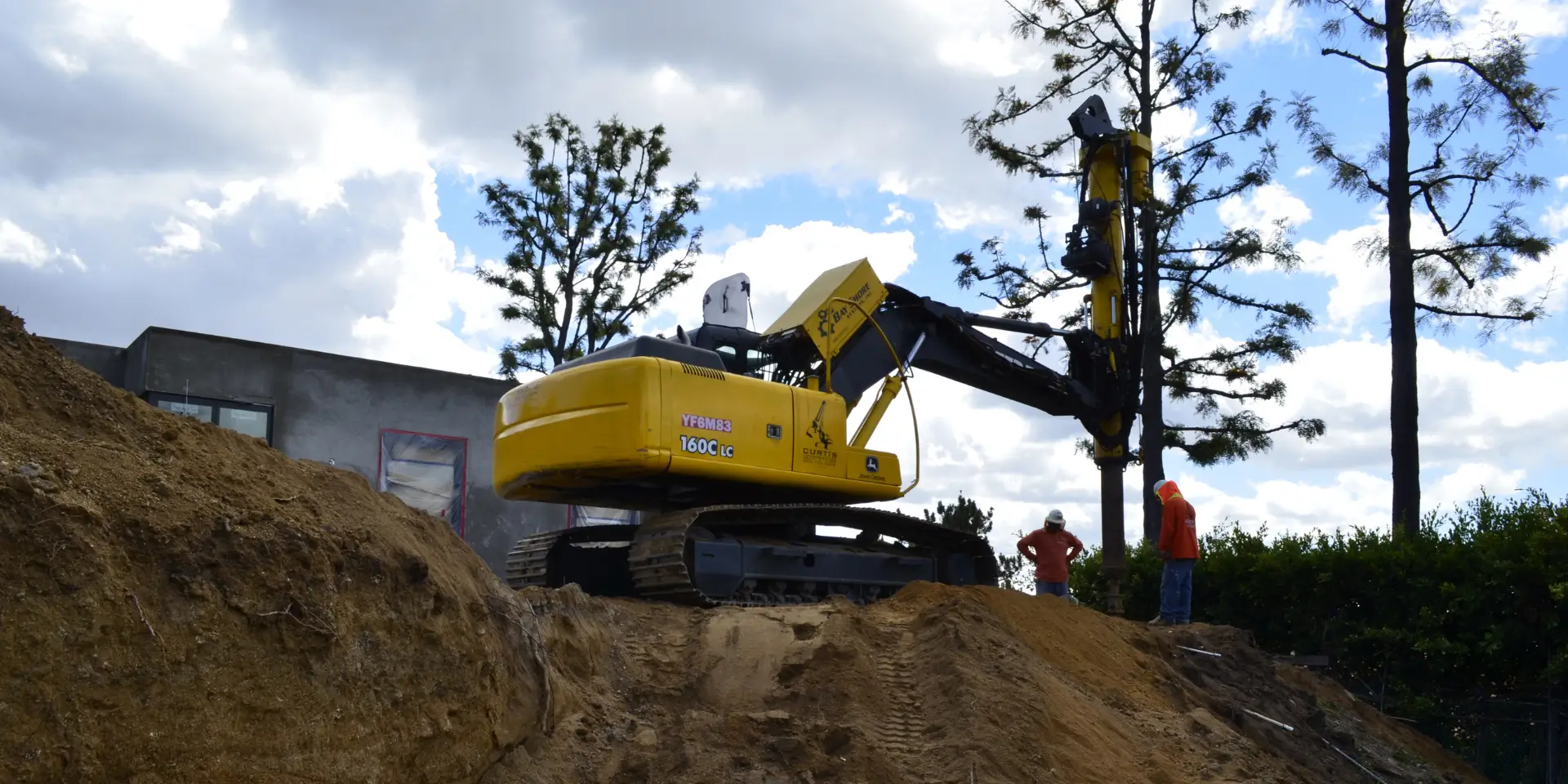
Los Angeles is known for its dramatic topography. From the Hollywood Hills to Brentwood and Pacific Palisades, hillside properties offer some of the most breathtaking views in Southern California. However, building on sloped terrain requires far more than traditional residential construction.
Engineering a hillside home demands specialized structural planning, soil analysis, and precision construction methods to ensure the home remains stable for decades.
In this guide, we explain how structural engineering keeps hillside homes safe, stable, and resilient in Los Angeles.
Why Hillside Construction Requires Advanced Structural Engineering
Unlike flat lots, hillside sites introduce several structural challenges:
• soil movement
• gravity-driven pressure on foundations
• drainage and erosion risks
• seismic forces
• access and excavation constraints
Because of these factors, hillside homes rely on engineered structural systems designed specifically for sloped terrain.
A well-engineered hillside home distributes loads properly, stabilizes the surrounding soil, and prevents long-term movement that could damage the structure.
The Role of Geotechnical Studies
Before any hillside construction begins, a geotechnical investigation is required.
Geotechnical engineers analyze:
- soil composition
- slope stability
- groundwater conditions
- load-bearing capacity
- landslide risk
The resulting soils report determines how the foundation and structural systems must be engineered.
In Los Angeles, this report is critical because hillside areas often contain complex soil conditions that vary dramatically even within short distances.
Specialized Foundations for Hillside Homes
Standard slab foundations are rarely suitable for hillside construction.
Instead, engineers design foundation systems such as:
Caissons (Drilled Piers)
Deep concrete columns drilled into stable soil or bedrock to anchor the structure.
Grade Beams
Horizontal beams connecting deep foundations that distribute structural loads across the slope.
Stepped Foundations
Foundations built in tiers that follow the natural slope of the terrain.
These systems ensure the home remains stable even on steep lots.
Retaining Walls: Stabilizing the Surrounding Land
Retaining walls are one of the most critical structural components of hillside construction.
Their role is to hold back soil and prevent movement around the structure.
Retaining walls must be engineered to withstand:
- lateral soil pressure
- water buildup
- seismic forces
Depending on the site, builders may use:
- reinforced concrete retaining walls
- tie-back retaining systems
- soldier piles and lagging
- gravity walls
Properly engineered retaining systems protect both the home and the surrounding landscape.
Drainage Systems That Protect Hillside Structures
Water is one of the biggest threats to hillside homes.
Without proper drainage design, water infiltration can weaken soil, increase hydrostatic pressure, and contribute to slope movement.
A comprehensive hillside drainage system often includes:
• subdrains behind retaining walls
• perforated drainage pipes
• surface grading
• stormwater control systems
• waterproofing membranes
Managing water effectively is essential for long-term hillside stability.
Structural Systems Designed for Earthquakes
Los Angeles sits in one of the most active seismic regions in the United States.
Hillside homes must be engineered to withstand earthquake forces while maintaining slope stability.
Structural engineers design systems that incorporate:
- reinforced concrete foundations
- shear walls
- steel structural elements
- flexible framing systems
These elements allow the structure to absorb and distribute seismic forces safely.
Construction Techniques for Steep Hillside Lots
Building on a hillside requires construction strategies that differ significantly from traditional projects.
Builders must carefully plan:
- excavation sequencing
- slope stabilization during construction
- material delivery logistics
- crane access
- safety protocols for steep terrain
Experienced contractors coordinate closely with engineers and architects to ensure the project progresses safely and efficiently.
Why Experience Matters in Hillside Construction
Hillside construction is one of the most complex forms of residential building.
Projects require close coordination between:
- architects
- structural engineers
- geotechnical engineers
- surveyors
- experienced contractors
When these professionals work together from the earliest planning stages, hillside homes can achieve both architectural beauty and long-term structural integrity.
Final Thoughts
Hillside homes offer unmatched views, privacy, and architectural possibilities. But the complexity of sloped terrain demands careful engineering and expert construction.
From geotechnical analysis to retaining walls and deep foundations, structural design is the key to building safe and stable hillside homes in Los Angeles.
When executed properly, hillside construction allows homeowners to transform challenging terrain into extraordinary living spaces.
FAQs
Why do hillside homes need special foundations?
Hillside homes require specialized foundations such as caissons and grade beams because sloped terrain creates uneven load distribution and soil pressure that traditional slab foundations cannot safely support.
What is a soils report in hillside construction?
A soils report is a geotechnical analysis that evaluates soil stability, load-bearing capacity, groundwater conditions, and landslide risk. It determines how the foundation and structural systems must be designed.
Are hillside homes safe during earthquakes?
Yes. Properly engineered hillside homes include reinforced foundations, shear walls, and structural systems designed to withstand seismic forces common in Southern California.
What is the purpose of retaining walls?
Retaining walls stabilize soil on steep terrain and prevent erosion or slope movement that could threaten the structural integrity of the home.
Can any contractor build a hillside home?
Not all contractors specialize in hillside construction. These projects require experience with complex structural systems, geotechnical coordination, and specialized building techniques.