

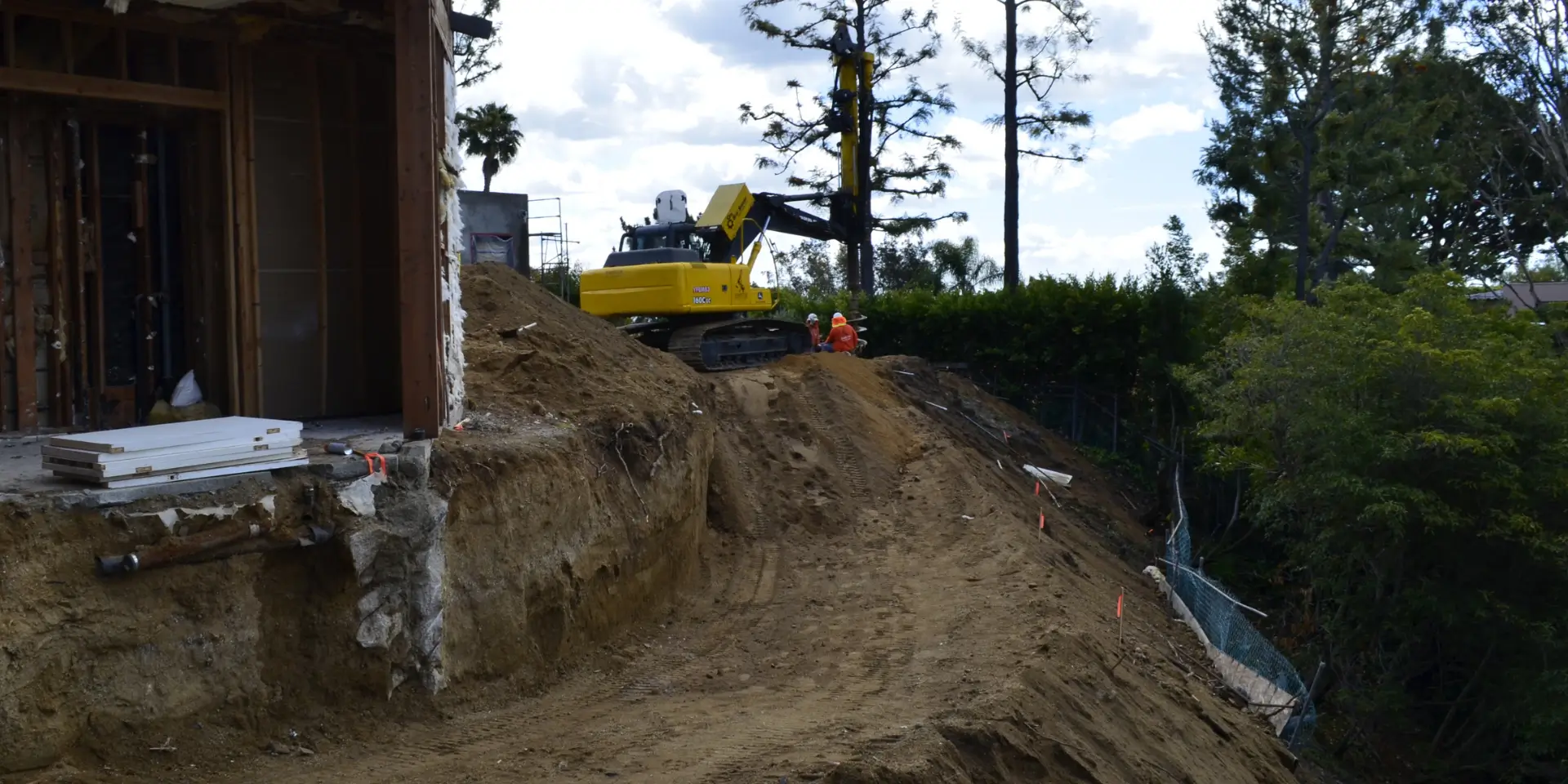
Building a home on a hillside offers unique architectural possibilities and stunning views, but it also presents logistical challenges that do not exist on flat construction sites. One of the most significant challenges is site access.
Transporting materials, equipment, and crews to steep or restricted locations requires careful planning and specialized construction strategies. In hillside neighborhoods across Los Angeles and Southern California, builders must adapt their construction methods to work safely and efficiently on difficult terrain.
Understanding how construction teams overcome these access challenges reveals the level of coordination and planning required to successfully build hillside homes.
Why Site Access Is a Major Challenge in Hillside Construction
Unlike flat properties with open construction space, hillside lots often have limited access points. Roads may be narrow, steep, or winding, and the buildable portion of the property may sit significantly above or below street level.
These conditions create challenges such as:
- limited staging areas for materials
- restricted equipment access
- difficulty delivering large building components
- increased safety considerations for workers
- additional planning for excavation and foundation work
Builders must carefully evaluate the site before construction begins to determine the most efficient way to move materials and equipment.
Site Planning Before Construction Begins
Successful hillside construction starts with thorough site analysis and logistical planning.
Builders, engineers, and project managers evaluate factors such as:
- road access and delivery routes
- slope angle and terrain conditions
- available staging areas for materials
- crane placement opportunities
- temporary access pathways
This planning ensures that construction activities can proceed efficiently while minimizing disruption to surrounding properties.
Using Cranes for Material Delivery
One of the most common solutions for hillside construction access is the use of cranes.
Tower cranes or mobile cranes can lift heavy materials directly from the street level to the construction site. This method allows builders to move items such as steel beams, lumber packages, and concrete forms without relying on trucks or vehicles to reach the hillside.
Cranes also help reduce the amount of manual handling required on steep terrain, improving both efficiency and safety.
Temporary Access Roads and Pathways
In some cases, construction teams create temporary access paths that allow smaller equipment and workers to move safely across the site.
These pathways may include:
- graded access roads
- temporary stairways or ramps
- reinforced pathways for equipment
- protective ground coverings to stabilize soil
Temporary access infrastructure helps maintain safe working conditions throughout the construction process.
Material Staging Strategies
On hillside sites with limited space, staging materials becomes a critical part of construction planning.
Instead of storing large quantities of materials on-site, builders often schedule deliveries in smaller batches that arrive exactly when needed.
This approach—often referred to as “just-in-time delivery”—helps reduce congestion and ensures that materials are available when construction teams require them.
Careful scheduling also helps prevent delays caused by limited storage space.
Specialized Equipment for Steep Terrain
Standard construction equipment may not always be suitable for steep hillside conditions.
Builders may rely on specialized machinery designed for challenging terrain, such as:
- compact excavators
- tracked loaders
- articulated dumpers
- lifting equipment designed for tight spaces
These machines allow construction teams to maneuver safely while minimizing disturbance to the surrounding hillside.
Safety Considerations on Hillside Construction Sites
Safety is a top priority when working on steep terrain.
Construction teams must implement additional safety measures to protect workers and prevent accidents. These measures may include:
- reinforced scaffolding systems
- fall protection equipment
- slope stabilization during excavation
- secure material storage areas
Regular safety inspections and training help ensure that crews can work effectively under challenging site conditions.
Coordinating Deliveries in Dense Neighborhoods
Many hillside construction projects take place in established residential neighborhoods where space is limited.
Builders must coordinate material deliveries carefully to avoid disrupting traffic or neighboring properties.
Delivery coordination often involves:
- scheduled delivery windows
- traffic management plans
- communication with neighbors and local authorities
- staging materials at nearby locations before lifting them onto the site
These strategies help construction teams maintain efficient operations while respecting the surrounding community.
The Importance of Experienced Project Management
Hillside construction projects require experienced project managers who understand the complexities of working on challenging terrain.
Project managers coordinate all aspects of the construction process, including:
- logistics and material deliveries
- equipment scheduling
- coordination between subcontractors
- safety oversight
Their planning ensures that the project progresses smoothly despite the inherent challenges of hillside construction.
Final Thoughts
Hillside construction presents unique logistical challenges that require thoughtful planning and specialized solutions. From crane-assisted material delivery to carefully coordinated staging strategies, builders rely on a combination of experience and technology to overcome difficult site conditions.
With the right planning and expertise, even the most challenging hillside locations can become the foundation for exceptional residential architecture.
By addressing access challenges early in the construction process, builders can ensure that projects move forward efficiently while maintaining safety and structural integrity.
FAQs
Why is hillside construction more difficult than building on flat land?
Hillside construction involves steep terrain, limited access, and additional engineering requirements that make logistics more complex.
How do builders move materials to hillside construction sites?
Builders often use cranes, specialized equipment, and staged deliveries to transport materials safely to steep or difficult locations.
What equipment is used for hillside construction?
Compact excavators, tracked loaders, cranes, and other specialized machinery are commonly used to operate safely on slopes.
Do hillside projects take longer to build?
Hillside construction may require additional planning and engineering, which can extend project timelines compared to flat sites.
How do builders maintain safety on steep construction sites?
Safety measures include fall protection systems, reinforced scaffolding, slope stabilization, and strict construction protocols.