

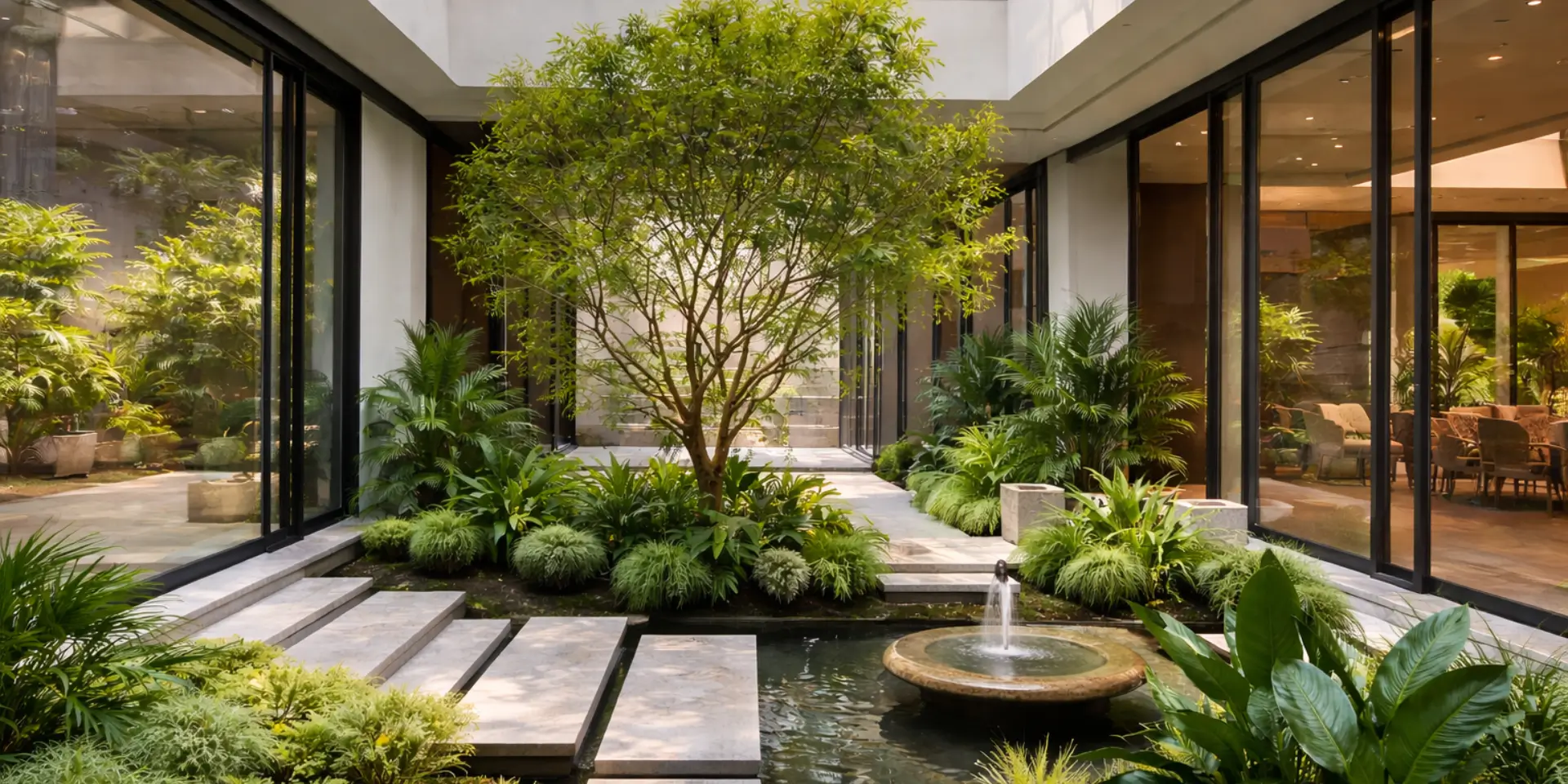
Luxury residential architecture is constantly evolving, but some of the most compelling design ideas are rooted in timeless architectural traditions. One feature that is making a strong comeback in modern luxury homes is the indoor courtyard.
Originally found in Mediterranean, Spanish, and Roman architecture, courtyards historically served as the heart of the home—bringing in natural light, fresh air, and a sense of privacy. Today, architects are reinterpreting this concept in contemporary ways, using indoor courtyards to create calm, light-filled spaces that blur the boundary between interior and exterior living.
In Los Angeles and other luxury markets, indoor courtyards have become an increasingly popular design element for homeowners seeking both architectural sophistication and a deeper connection to nature.
What Is an Indoor Courtyard?
An indoor courtyard is an open or semi-open space that is integrated into the center or interior portion of a home. Unlike a traditional backyard or patio, the courtyard is surrounded by the structure of the home itself.
Modern courtyards may be fully open to the sky or partially enclosed with glass walls and retractable roofing systems. In many designs, the courtyard becomes a focal point that connects multiple areas of the home.
Indoor courtyards often feature elements such as:
- natural landscaping
- water features
- sculptural trees or plants
- stone or wood flooring
- seating areas
- fire features
The goal is to create a private outdoor environment that can be experienced from multiple rooms inside the house.
Why Courtyards Are Returning to Modern Architecture
Several factors are driving the renewed interest in courtyard-centered home design.
One reason is the growing desire for homes that feel peaceful and connected to nature. Courtyards introduce natural elements directly into the architecture, creating moments of calm and visual relief within the built environment.
Another reason is privacy. In dense urban neighborhoods such as many areas of Los Angeles, homeowners often want outdoor spaces that are protected from surrounding properties. A courtyard provides open air and sunlight without exposing the home to street or neighbor views.
Architects also appreciate courtyards because they allow natural light to penetrate deeper into the home. Instead of relying solely on exterior walls for windows, a courtyard creates additional opportunities for daylight and ventilation.
Enhancing Natural Light and Airflow
One of the most powerful benefits of an indoor courtyard is the way it transforms light inside the home.
By introducing an open space within the structure, courtyards allow sunlight to reach rooms that might otherwise feel enclosed or shaded. Hallways, living spaces, and even bedrooms can benefit from this additional exposure to natural light.
Courtyards also support passive ventilation. Open-air spaces encourage airflow through the home, which can improve comfort while reducing reliance on mechanical cooling.
In warm climates like Southern California, this natural airflow contributes to a healthier and more pleasant indoor environment.
Creating a Private Outdoor Experience
Luxury homeowners often want outdoor living spaces that feel intimate and protected. Courtyards are uniquely suited to deliver this experience.
Because they are enclosed by the home’s architecture, courtyards naturally shield the space from neighboring properties and street views. This makes them ideal for:
- quiet morning coffee areas
- meditation or wellness spaces
- private gardens
- intimate entertaining spaces
For homes located on narrow urban lots, courtyards can also provide a sense of openness that might otherwise be difficult to achieve.
Architectural Impact and Visual Drama
From a design perspective, courtyards add depth and drama to residential architecture.
Large glass walls facing the courtyard create striking visual connections between interior and exterior spaces. As natural light shifts throughout the day, the courtyard becomes a dynamic focal point visible from multiple rooms.
Architects often use courtyards to frame sculptural landscape elements such as olive trees, Japanese maples, or minimalist water features. These elements act almost like living artwork within the home.
The result is an environment where architecture and landscape interact continuously.
Courtyards and Indoor-Outdoor Living
Indoor-outdoor living is a defining element of California architecture, and courtyards enhance this experience beautifully.
Rather than limiting outdoor space to the perimeter of the home, a courtyard places nature directly within the center of the living environment.
Large sliding or pivoting glass doors can open fully to the courtyard, allowing interior spaces to expand seamlessly into the outdoor area. This flexibility makes the home feel larger and more adaptable for entertaining or everyday living.
When designed thoughtfully, the courtyard becomes one of the most frequently used spaces in the house.
Materials That Elevate Courtyard Design
Material selection plays a major role in creating a courtyard that feels both luxurious and harmonious with the home’s architecture.
Common materials used in modern luxury courtyards include:
- natural stone paving
- warm wood decking
- architectural concrete
- minimalist steel elements
- textured stucco walls
- integrated landscape lighting
These materials complement the clean lines of contemporary architecture while maintaining a natural, calming atmosphere.
Designing Courtyards for Modern Lifestyles
While courtyards have historical roots, today’s designs are highly adaptable to modern lifestyles.
Some homeowners prefer tranquil garden courtyards designed for relaxation and quiet reflection. Others incorporate entertainment features such as outdoor dining areas, fire pits, or lounge seating.
In luxury homes, courtyards may also function as wellness spaces that include features like plunge pools, yoga platforms, or meditation gardens.
The versatility of the courtyard allows architects to tailor the space to the homeowner’s lifestyle and priorities.
The Builder’s Role in Executing Courtyard Design
Although courtyards appear simple conceptually, they require careful construction planning.
Builders must coordinate several technical factors, including:
- structural integration with the home
- drainage and waterproofing
- landscape irrigation
- exterior lighting systems
- seamless transitions between indoor and outdoor flooring
Proper execution ensures that the courtyard remains both beautiful and functional over time.
Experienced builders also work closely with architects to ensure that the design intent is preserved while addressing practical construction considerations.
Final Thoughts
Indoor courtyards represent a powerful fusion of timeless design and modern living. By bringing natural light, air, and landscape into the center of the home, courtyards create spaces that feel calm, private, and deeply connected to the environment.
In luxury residential architecture, this feature offers both aesthetic impact and everyday functionality. Whether used as a peaceful garden retreat or an elegant entertaining space, the indoor courtyard continues to inspire architects and homeowners alike.
As modern California architecture evolves, the courtyard remains a compelling way to create homes that feel open, balanced, and harmonious with their surroundings.
FAQs
What is an indoor courtyard in a home?
An indoor courtyard is an open or semi-open outdoor space located within the structure of a home, typically surrounded by interior rooms or walls.
Why are courtyards popular in luxury homes?
Courtyards offer privacy, natural light, ventilation, and a strong connection to nature while creating a visually striking architectural focal point.
Are indoor courtyards suitable for modern homes?
Yes. Many contemporary homes incorporate courtyards to enhance natural light, improve airflow, and create private outdoor living spaces.
Do courtyards improve natural lighting inside a house?
Yes. Because they introduce open space within the home’s layout, courtyards allow sunlight to reach interior rooms that might otherwise have limited exterior exposure.
Can courtyards work in urban environments?
Absolutely. Courtyards are particularly useful in dense neighborhoods where homeowners want private outdoor space without being exposed to surrounding properties.