

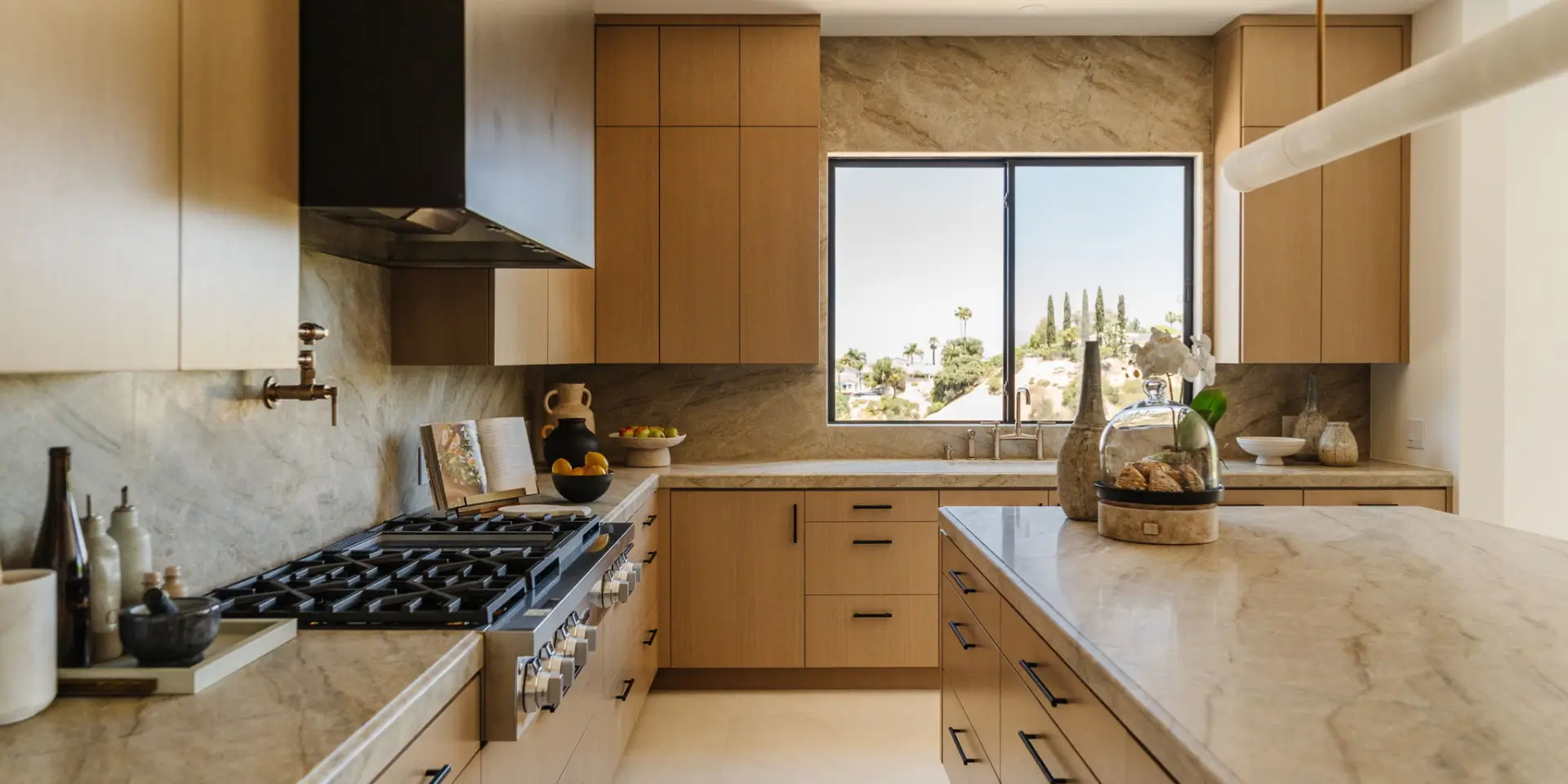
In Los Angeles, the kitchen has evolved far beyond a purely functional space. It is now the central hub of the home—where design, functionality, and lifestyle converge. For homeowners investing in high-end properties, kitchen remodeling is one of the most impactful ways to elevate both daily living and long-term property value.
Luxury kitchen remodeling is not defined solely by expensive finishes. Instead, it is driven by thoughtful layout, seamless flow, and carefully selected materials that work together to create a cohesive and highly functional space.
Why Kitchen Remodeling Is a High-Impact Investment
Kitchen remodeling consistently ranks among the most valuable home improvements. In competitive markets like Los Angeles, a well-designed kitchen can significantly influence both resale value and buyer perception.
Beyond financial return, a modern kitchen improves everyday usability, enhances comfort, and creates a more connected living environment. When designed correctly, it supports cooking, entertaining, and family interaction without compromise.
For luxury homes, the kitchen often becomes a defining feature of the entire property.
The Importance of Layout in Modern Kitchens
Layout is the foundation of any successful kitchen remodel. Regardless of material quality or design style, a poorly planned layout can limit functionality and disrupt flow.
Modern luxury kitchens prioritize efficiency and spatial organization. The goal is to create a layout that allows movement between key areas—cooking, preparation, and storage—without obstruction.
Key layout considerations include:
- clear circulation paths between zones
- optimal placement of appliances
- efficient work triangle between sink, stove, and refrigerator
- integration with adjacent living spaces
Open-concept layouts are particularly popular in Los Angeles, allowing kitchens to connect seamlessly with dining and living areas.
Creating Seamless Flow Between Spaces
Flow is what transforms a kitchen from a standalone room into an integrated part of the home.
In modern homes, kitchens are often designed to open directly into living and outdoor areas. This creates a continuous environment that supports both daily living and entertaining.
Design strategies that improve flow include:
- removing unnecessary walls
- aligning flooring materials across spaces
- using large openings or sliding glass doors
- designing kitchen islands that anchor the space
When flow is executed properly, the kitchen becomes a natural extension of the home rather than a separate zone.
Material Selection: Balancing Aesthetics and Performance
Luxury kitchens are defined by materials that offer both visual impact and long-term durability.
Rather than focusing only on appearance, high-end remodeling projects prioritize materials that can withstand daily use while maintaining their finish over time.
Popular material choices include:
- natural stone countertops such as quartzite or marble
- custom cabinetry with high-quality finishes
- durable hardwood or engineered flooring
- high-performance backsplashes and wall panels
Material consistency across surfaces helps create a cohesive and refined design.
The Role of Custom Cabinetry
Cabinetry is one of the most prominent elements in any kitchen, both visually and functionally.
Custom cabinetry allows homeowners to optimize storage while maintaining a tailored aesthetic. Unlike standard cabinets, custom solutions are designed specifically for the space, ensuring efficient use of every inch.
Well-designed cabinetry includes:
- integrated storage solutions
- soft-close mechanisms
- concealed appliances
- clean, modern lines
This level of customization contributes significantly to both usability and overall design quality.
Kitchen Islands as a Central Feature
In modern luxury kitchens, the island often serves as the focal point of the space.
Beyond providing additional workspace, islands can function as gathering areas, dining spaces, and visual anchors.
Design considerations for kitchen islands include:
- appropriate size relative to the room
- seating integration
- storage and appliance placement
- material contrast for visual interest
A well-designed island enhances both functionality and social interaction within the kitchen.
Integrating High-Performance Appliances
Appliances play a critical role in both the functionality and design of a luxury kitchen.
Modern kitchens often feature high-performance appliances that are integrated seamlessly into the overall design. This creates a clean and cohesive look while maintaining advanced functionality.
Key considerations include:
- built-in or panel-ready appliances
- professional-grade cooking equipment
- energy-efficient systems
- strategic placement for ease of use
Proper integration ensures that appliances enhance rather than disrupt the design.
Lighting Design in Luxury Kitchens
Lighting is an essential component of kitchen design that is often overlooked.
A well-designed lighting plan combines multiple layers to support different functions within the space. This typically includes task lighting, ambient lighting, and accent lighting.
Effective lighting strategies include:
- under-cabinet lighting for work areas
- pendant lighting over islands
- recessed lighting for general illumination
- accent lighting to highlight architectural features
Balanced lighting improves both usability and atmosphere.
Indoor–Outdoor Integration in Los Angeles Homes
In Southern California, indoor–outdoor living is a defining characteristic of residential design.
Kitchen remodeling projects often incorporate features that connect interior spaces with outdoor environments. This may include large sliding doors, outdoor kitchens, or adjacent dining areas.
These integrations expand usable space and enhance the overall lifestyle experience.
Long-Term Value of Luxury Kitchen Remodeling
A well-executed kitchen remodel provides both immediate and long-term benefits.
In addition to improving daily living, a modern kitchen can increase property value and attract future buyers. High-quality materials, efficient layouts, and timeless design choices contribute to long-term durability and market appeal.
Investing in thoughtful design ensures that the kitchen remains relevant and functional for years to come.
Final Thoughts
Luxury kitchen remodeling in Los Angeles is about more than aesthetics—it is about creating a space that supports how people live, interact, and experience their homes.
By focusing on layout, flow, materials, and integration, homeowners can transform their kitchens into highly functional and visually refined spaces. With the right design approach and experienced professionals, a kitchen remodel can become one of the most valuable and impactful improvements in any home.
FAQs
What makes a kitchen remodel “luxury”?
Luxury kitchen remodels focus on custom design, high-quality materials, efficient layouts, and seamless integration with the rest of the home.
How important is layout in kitchen remodeling?
Layout is critical. It determines how efficiently the space functions and how easily people can move through it.
Do kitchen remodels increase home value in Los Angeles?
Yes. Kitchens are one of the most influential factors in resale value and buyer interest.
What materials are best for luxury kitchens?
Durable and high-end materials such as natural stone, custom cabinetry, and high-performance surfaces are commonly used.
Should kitchens connect to outdoor spaces?
In Los Angeles, indoor–outdoor integration is highly desirable and enhances both usability and property value.