

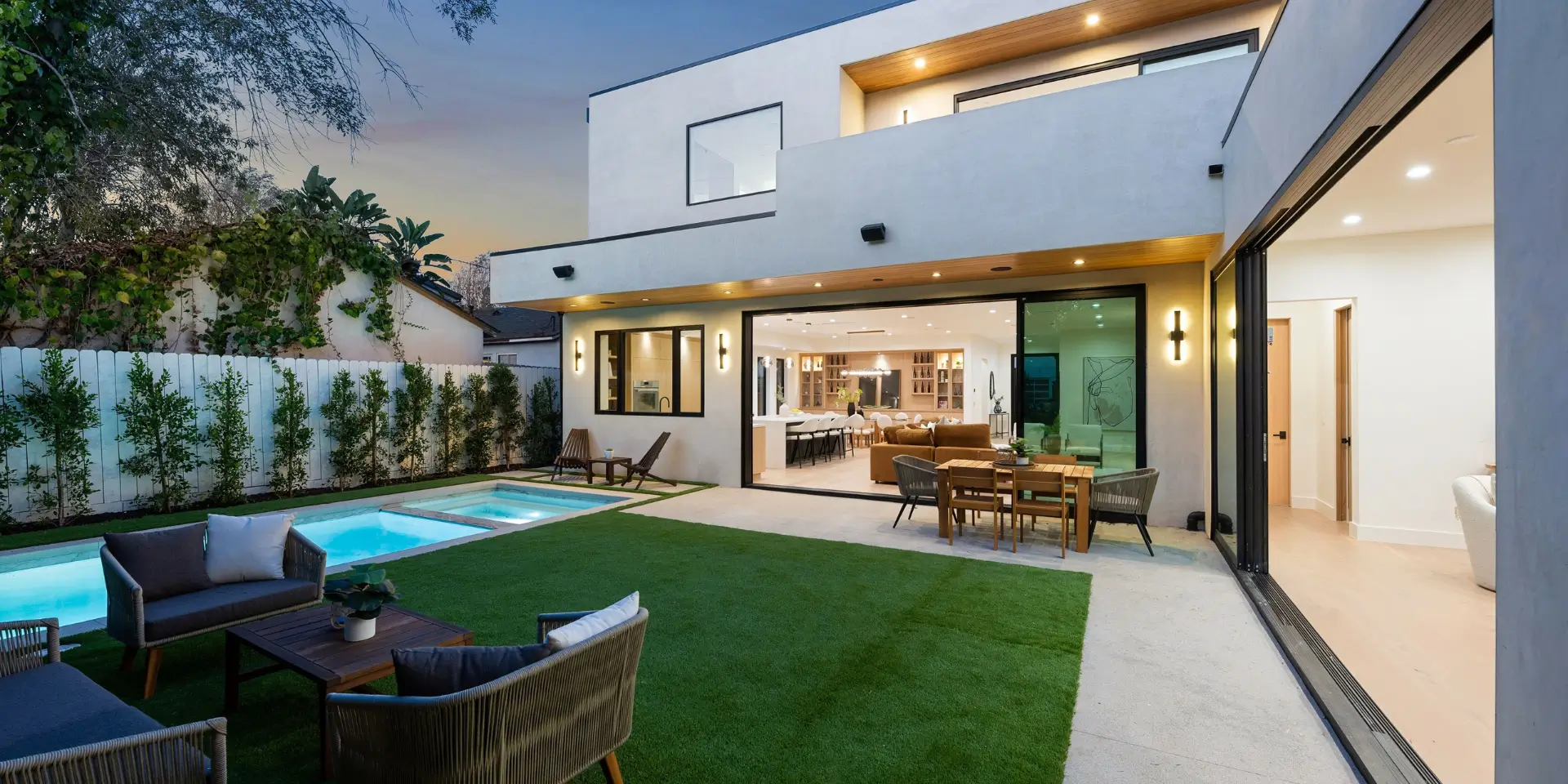
In Los Angeles, outdoor living is not a seasonal luxury—it is an essential part of everyday life. With favorable weather year-round, homeowners increasingly view their outdoor spaces as extensions of the home rather than separate areas.
Modern outdoor design goes beyond basic patios or pools. Today’s high-end properties incorporate fully integrated outdoor environments that combine relaxation, entertainment, and functionality. When designed thoughtfully, these spaces can transform a backyard into a private resort.
For homeowners and developers alike, investing in pools, patios, and outdoor living areas offers both lifestyle benefits and long-term property value.
Why Outdoor Living Is a Key Feature in Los Angeles Homes
Outdoor spaces play a significant role in how homes are experienced in Southern California.
In competitive real estate markets, properties with well-designed outdoor areas often stand out. Buyers increasingly expect features that support entertaining, relaxation, and seamless indoor–outdoor transitions.
A well-executed outdoor living space can:
- expand usable square footage
- enhance daily comfort and enjoyment
- improve property appeal and resale value
- create a unique lifestyle experience
This makes outdoor design a strategic investment rather than a purely aesthetic upgrade.
Pools as a Central Design Element
In luxury homes, pools often serve as the focal point of the outdoor environment.
Modern pool design prioritizes both visual impact and usability. Rather than treating the pool as a standalone feature, it is integrated into the overall layout of the backyard.
Key considerations in pool design include:
- placement relative to the home
- integration with patios and seating areas
- views and sightlines
- safety and accessibility
Design styles may vary from clean, geometric pools to more natural, resort-inspired layouts. Features such as infinity edges, integrated spas, and shallow lounging areas further enhance the experience.
Patios That Extend Interior Living Spaces
Patios act as a bridge between indoor and outdoor environments.
When designed correctly, patios feel like a continuation of the home’s interior rather than a separate area. This is achieved through consistent materials, aligned elevations, and clear visual connections.
Effective patio design often includes:
- durable flooring materials that match or complement interior finishes
- covered areas for shade and comfort
- flexible layouts for dining and lounging
- direct access from main living spaces
These elements create a cohesive transition between indoor and outdoor living.
Outdoor Kitchens and Dining Areas
Outdoor kitchens have become a defining feature of high-end residential design in Los Angeles.
They allow homeowners to cook, dine, and entertain without moving between indoor and outdoor spaces. This improves convenience while enhancing the overall experience of hosting guests.
Typical outdoor kitchen features include:
- built-in grills and cooking stations
- refrigeration and storage
- weather-resistant cabinetry
- dedicated dining areas
When integrated into the overall design, these spaces support both casual gatherings and larger events.
Creating Defined Zones Within Outdoor Spaces
Large outdoor areas benefit from clear organization.
Rather than treating the backyard as a single open space, designers create distinct zones that serve different functions. This approach improves usability and makes the space feel more intentional.
Common outdoor zones include:
- pool and relaxation areas
- dining and entertainment spaces
- lounge or fire pit areas
- landscaped gardens or quiet retreats
Defining these areas allows homeowners to use the space more effectively.
Material Selection for Durability and Style
Outdoor environments require materials that can withstand sun exposure, moisture, and temperature changes.
Selecting the right materials ensures that the space remains both functional and visually appealing over time.
Common material choices include:
- natural stone or porcelain pavers
- weather-resistant wood or composite decking
- corrosion-resistant metal finishes
- high-performance outdoor fabrics
Consistency in material selection helps unify the design and create a polished appearance.
Landscaping and Natural Integration
Landscaping plays a critical role in outdoor living design.
Plants, trees, and greenery help soften architectural elements while creating a more inviting environment. In Los Angeles, drought-tolerant and native plants are often used to balance sustainability with aesthetics.
Landscape design may include:
- layered planting for visual depth
- privacy screening using hedges or trees
- integrated irrigation systems
- lighting that highlights natural features
A well-designed landscape enhances both the beauty and functionality of the space.
Lighting Design for Outdoor Environments
Lighting extends the usability of outdoor spaces into the evening while enhancing safety and ambiance.
A layered lighting approach ensures that each area is properly illuminated without overpowering the design.
Effective outdoor lighting strategies include:
- pathway lighting for navigation
- accent lighting for architectural features
- ambient lighting for seating areas
- integrated lighting within steps and structures
Thoughtful lighting design creates a welcoming and functional environment after sunset.
Indoor–Outdoor Integration
One of the most important aspects of modern outdoor living is the connection between interior and exterior spaces.
Large sliding doors, consistent flooring materials, and aligned sightlines help create a seamless transition. This integration allows the home to feel larger and more connected to its surroundings.
In Los Angeles, this design approach is especially valuable, as it maximizes the use of outdoor areas throughout the year.
Long-Term Value of Outdoor Living Investments
Investing in outdoor living spaces provides both immediate lifestyle benefits and long-term financial returns.
Homes with well-designed outdoor areas tend to:
- attract higher buyer interest
- command stronger resale value
- offer increased usability and enjoyment
When executed with quality materials and thoughtful design, outdoor spaces remain valuable assets for years to come.
Final Thoughts
Designing resort-style backyards in Los Angeles is about creating environments that enhance how people live, relax, and connect with their surroundings. By integrating pools, patios, outdoor kitchens, and landscaping into a cohesive design, homeowners can transform their outdoor spaces into functional and luxurious extensions of the home.
With the right design strategy and experienced professionals, outdoor living becomes more than an upgrade—it becomes a defining feature of modern residential living.
FAQs
Do outdoor living spaces increase home value?
Yes. Well-designed outdoor spaces can significantly improve property value and buyer appeal.
What is the most important feature in a backyard design?
It depends on lifestyle, but pools, patios, and functional seating areas are often key elements.
Are outdoor kitchens worth it in Los Angeles?
Yes. They enhance convenience and are highly desirable in a climate that supports year-round outdoor living.
What materials are best for outdoor spaces?
Durable, weather-resistant materials such as stone, porcelain, and composite decking are ideal.
How can I make my backyard feel more luxurious?
By combining design elements such as pools, lighting, landscaping, and defined zones into a cohesive plan.